14.04.26
African states convene in Accra to advance protection of civilians from explosive weapons
By laura.boillot
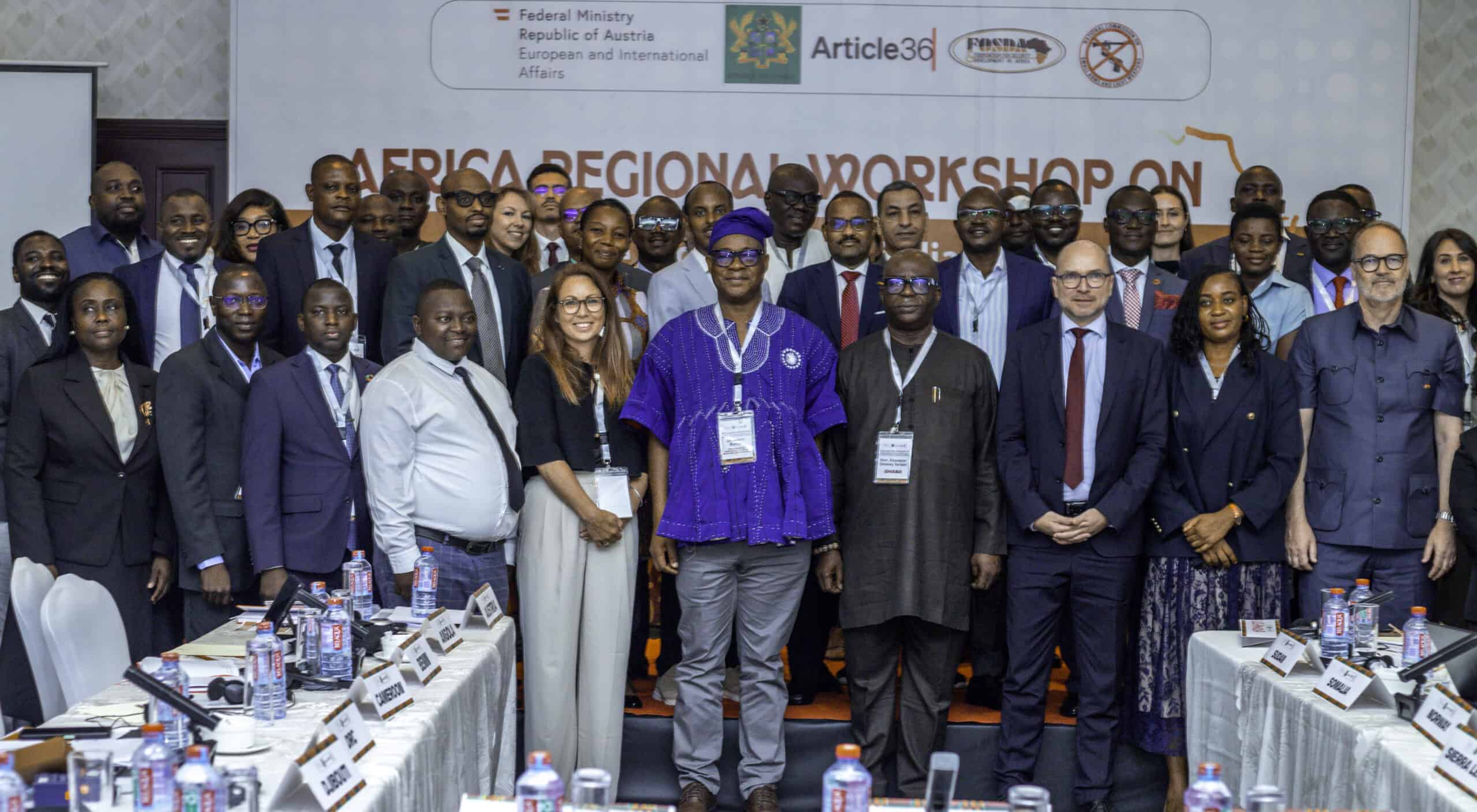
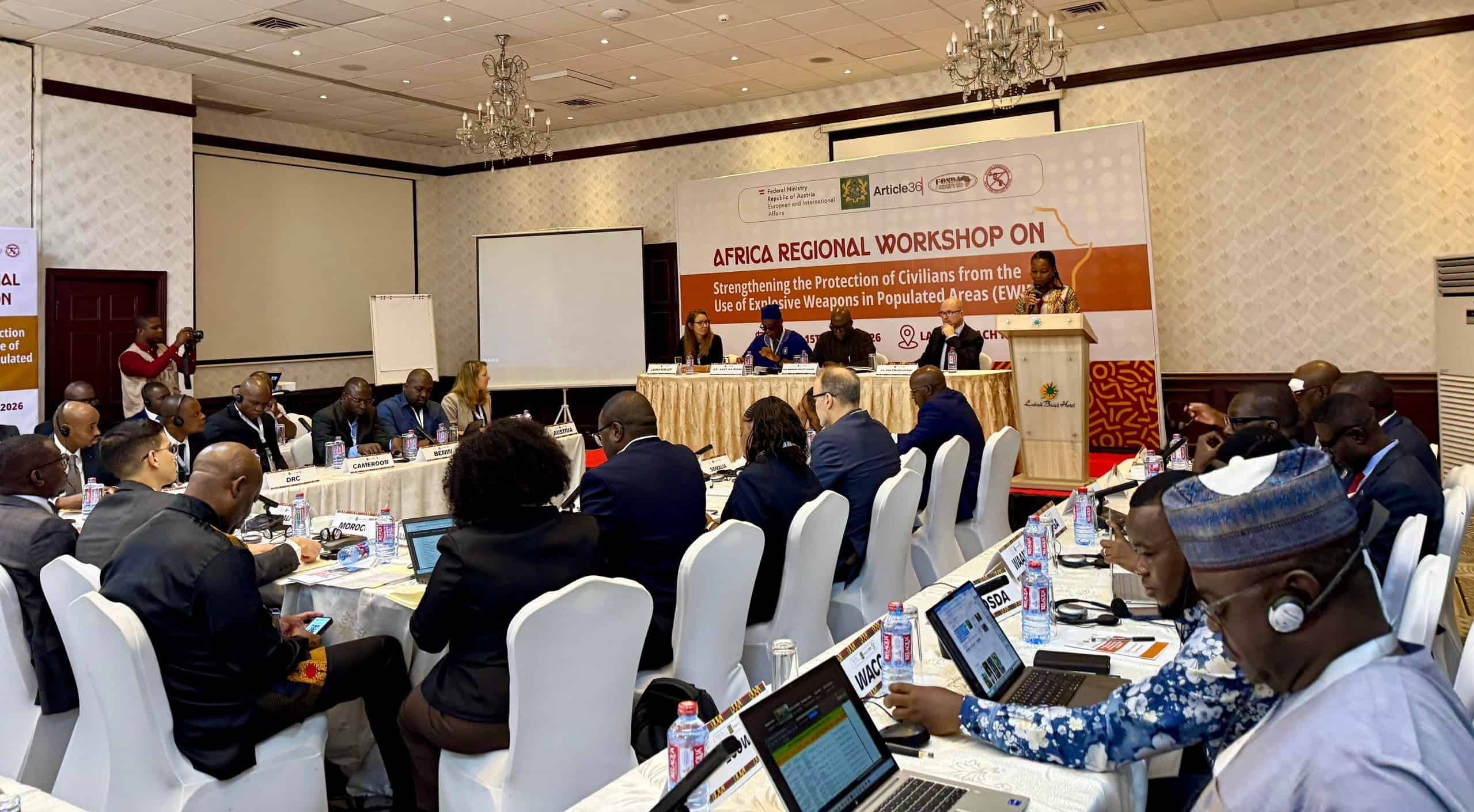
Representatives from across Africa, alongside international organisations and civil society, are gathering in Accra, Ghana on 14–15 April 2026 for a regional workshop focused on strengthening the protection of civilians from the use of explosive weapons in populated areas.
The workshop is co-hosted by the Government of Ghana, the Republic of Austria, and Article 36, and brings together a wide range of stakeholders to exchange experience, share good practice, and explore practical steps to reduce civilian harm.
Read the press release
View the full agenda
Explosive weapons, including artillery, rockets, and air-dropped bombs, project blast and fragmentation effects over a wide area. When used in populated areas, their impacts are often difficult to limit, frequently resulting in civilian casualties and damage to essential infrastructure such as hospitals, schools, and water and power systems.
The workshop focuses on the implementation of the Political Declaration on Strengthening the Protection of Civilians from the Humanitarian Consequences of Explosive Weapons in Populated Areas (EWIPA), adopted in 2022. The Declaration commits states to take concrete steps, including restricting or refraining from the use of explosive weapons in populated areas where civilian harm is likely, and strengthening policies and practices to better protect civilians.
Over two days, participants will participate in a programme covering key areas of implementation. Sessions will explore the humanitarian impacts of explosive weapons, including both direct and reverberating effects, and examine regional experiences across Africa.
Discussions will also address how military policies and operational practices can be strengthened to reduce harm, including through doctrine, planning, and targeting approaches. Further sessions will focus on the role of data collection and civilian harm tracking in informing better decision-making, as well as approaches to supporting conflict-affected communities through assistance, recovery, and risk education.
A central theme of the workshop is the importance of African leadership and regional cooperation. With rapid urbanisation across the continent and conflict increasingly affecting cities, the risks posed by explosive weapons in populated areas are becoming more acute. At the same time, African states have played a leading role in advancing humanitarian disarmament norms, and continued engagement will be critical to ensuring meaningful implementation of the EWIPA Declaration.
The workshop takes place following the recent endorsement of the Declaration from Nigeria, and a pledge from Ghana to endorse the Declaration announced by Vice Minister of the Interior – Hon. Ebenezer Okletey Terlabi.
The workshop builds on Ghana’s recent national consultation on the issue and reflects growing engagement across the region. It provides an opportunity to deepen understanding of the humanitarian consequences of explosive weapons, strengthen collaboration, and identify practical steps for advancing implementation at national and regional levels.
By bringing together policymakers, military practitioners, international organisations, and civil society, the Accra workshop aims to support progress in translating political commitments into operational practice, contributing to stronger protection for civilians in armed conflict.