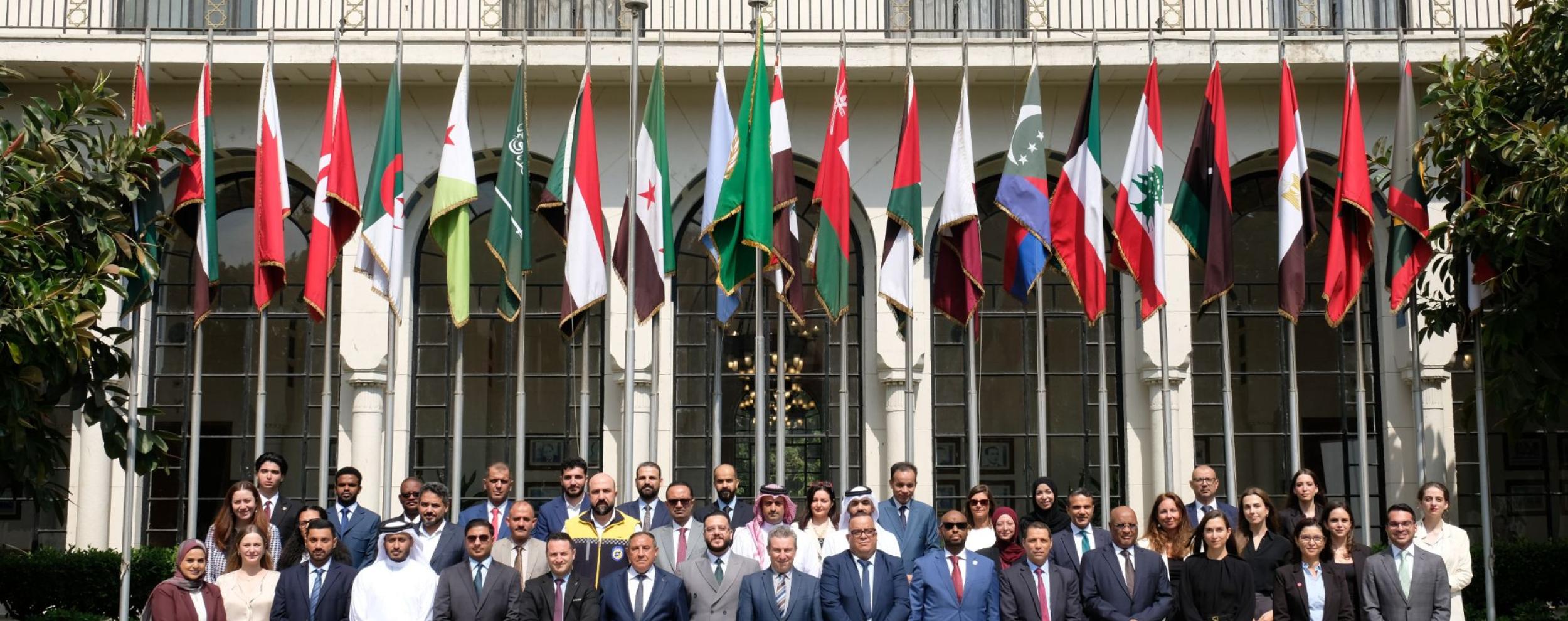
League of Arab States workshop on explosive weapons and autonomous weapons
Article 36 participated in a regional workshop on explosive weapons in populated areas (EWIPA), the Convention on Certain Conventional Weapons (CCW) and lethal autonomous weapons systems (LAWS), held in Cairo on 6–7 October 2026. Jointly organised by the United Nations Office for Disarmament Affairs (UNODA) and the League of Arab States, which hosted the meeting, the workshop brought together regional representatives, international organisations and civil society to explore practical measures to strengthen civilian protection.
The first day examined the humanitarian consequences of explosive weapons in populated areas and implementation of the 2022 Political Declaration. Sessions addressed deaths and injuries alongside damage to essential services, displacement and contamination by explosive remnants of war—consequences that continue long after fighting ends.
Laura Boillot, Director of Article 36, presented alongside Caroline Baudot of the International Committee of the Red Cross on translating the Declaration’s commitments into military policy and practice. Their presentation covered reviewing doctrine, understanding weapons’ effects, establishing operational restrictions and preparing personnel through training. It emphasised that civilian harm assessments must influence decisions, including changes to weapons or tactics and decisions to refrain from use.
The session also explored how civilian harm tracking can inform operational changes, and the importance of sustained assistance to victims and affected communities. Existing military policies provide relevant starting points, but need to be assessed against the Declaration’s commitments and strengthened where necessary.
The second day focused on autonomous weapons systems and the humanitarian, ethical and legal concerns raised by weapons that select and engage targets without further human intervention. Sessions examined predictability, human judgement and control, and responsibility and accountability for the use of force.
Participants considered international efforts to develop rules on autonomous weapons, including legally binding prohibitions and regulations, and opportunities for stronger regional engagement. Discussions also connected autonomy with the risks of explosive weapons in populated areas: greater technical precision does not remove blast and fragmentation effects, while autonomy can introduce additional risks through the speed, scale and unpredictability of engagements.
The programme included an overview of the CCW and its protocols, including provisions on explosive remnants of war. Across both days, the workshop supported exchange between diplomatic, legal, military and humanitarian practitioners, linking national implementation with regional cooperation and international action.