ATT Monitor report: bringing civilian harm evidence into arms export decisions
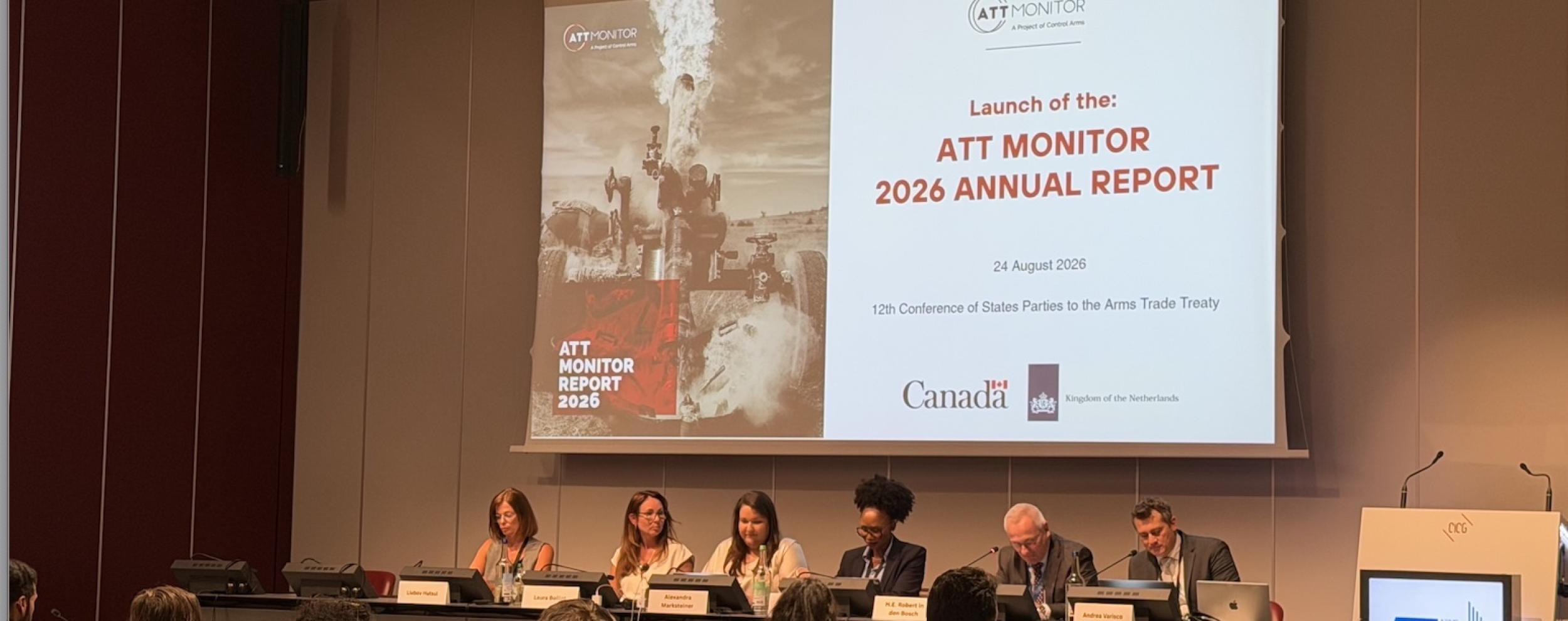
The 2026 ATT Monitor Annual Report, launched on 24 August at the Twelfth Conference of States Parties to the Arms Trade Treaty (ATT), includes a thematic chapter authored by Laura Boillot, Director of Article 36, on the Arms Trade Treaty and explosive weapons in populated areas: considerations for risk assessment.
The chapter examines how documented patterns of civilian harm from explosive weapons should inform arms export decisions, and how implementation of the ATT and the 2022 EWIPA Political Declaration can reinforce each other.
Its central argument is that the humanitarian consequences of bombing and shelling in populated areas are well documented and foreseeable. These include deaths and injuries, damage to homes and infrastructure, and longer-term disruption to healthcare, water, sanitation, energy and education. This evidence should inform assessments before weapons are transferred.
Using evidence to assess foreseeable risk
Under Article 7 of the ATT, exporting States Parties must assess whether arms could be used to commit or facilitate serious violations of international humanitarian law or international human rights law. Where an overriding risk remains after consideration of available mitigation measures, the export must not be authorised.
The chapter explains how evidence generated through work on EWIPA can strengthen these assessments. Relevant considerations include a recipient’s past and current use of explosive weapons in populated areas; the characteristics of the weapons and their likely use; military doctrine and operational practice; civilian casualties and infrastructure damage; and the credibility of investigations and mitigation measures.
Repeated patterns of harm, failures to investigate alleged violations and signs of conflict escalation can all indicate future risk. Assessments should consider trends over time and foreseeable reverberating effects, rather than rely on a snapshot of the recipient’s conduct. Denials and suspensions too often follow extensive civilian harm; the Treaty’s risk assessment framework is intended to support earlier, preventive action.
Connecting arms transfer policy and civilian protection
The ATT and the EWIPA Political Declaration have been developed through separate processes, but share a preventive humanitarian purpose. The ATT regulates transfers, while the Declaration establishes commitments concerning explosive weapon use, including restricting or refraining from the use of explosive weapons in populated areas when civilian harm may be expected.
New Zealand provides an example of how these frameworks can be connected in practice: its export control criteria explicitly identify the EWIPA Political Declaration among the non-legally binding commitments considered when assessing exports. Other states could take a similar approach by incorporating the Declaration into their export assessment guidance.
The Declaration strengthens the evidence and shared understanding available for applying existing obligations under the ATT. Responsible arms transfer policies can also help endorsing states give practical effect to their commitments to strengthen civilian protection and seek adherence to the Declaration by all parties to armed conflict.
The chapter identifies practical steps for states: incorporate EWIPA considerations into export assessment guidance; reassess risks as circumstances change; explain how civilian harm evidence and mitigation measures inform decisions; and connect export control, military and civilian protection policies. Greater exchange between ATT and EWIPA implementation processes would support this work.